
Prairie Rose Crabapple — A Forgotten Native Tree Worth Growing
A Mackenzie Younger Native Plant Spotlight
Among the many flowering trees native to North America, few are as unusual and underappreciated as the Prairie Rose Crabapple (Malus ioensis). Native to the prairies and open woodlands of the Midwest, this small tree combines the romantic beauty of a flowering crabapple with the ecological value of a truly native species.
In spring, Prairie Rose Crabapple bursts into bloom with fragrant double-pink flowers that resemble miniature roses suspended along its branches. The flowers attract a wide diversity of native pollinators, including bees and butterflies, while the tree itself supports local wildlife throughout the growing season. By autumn, small green-to-golden crabapples persist on the branches and provide food for birds and other animals.
Unlike many ornamental crabapples commonly planted in suburban landscapes, Malus ioensis has a looser, more natural branching habit that feels perfectly suited to meadow-inspired gardens and native landscapes. Its slightly rugged appearance gives it tremendous charm, especially when planted alongside native grasses and prairie wildflowers.
At the New York Flower Farm, we love Prairie Rose Crabapple for its combination of beauty, fragrance, wildlife value, and sense of place. It’s the kind of tree that feels both ornamental and deeply connected to the American landscape — a rare quality in modern gardening.
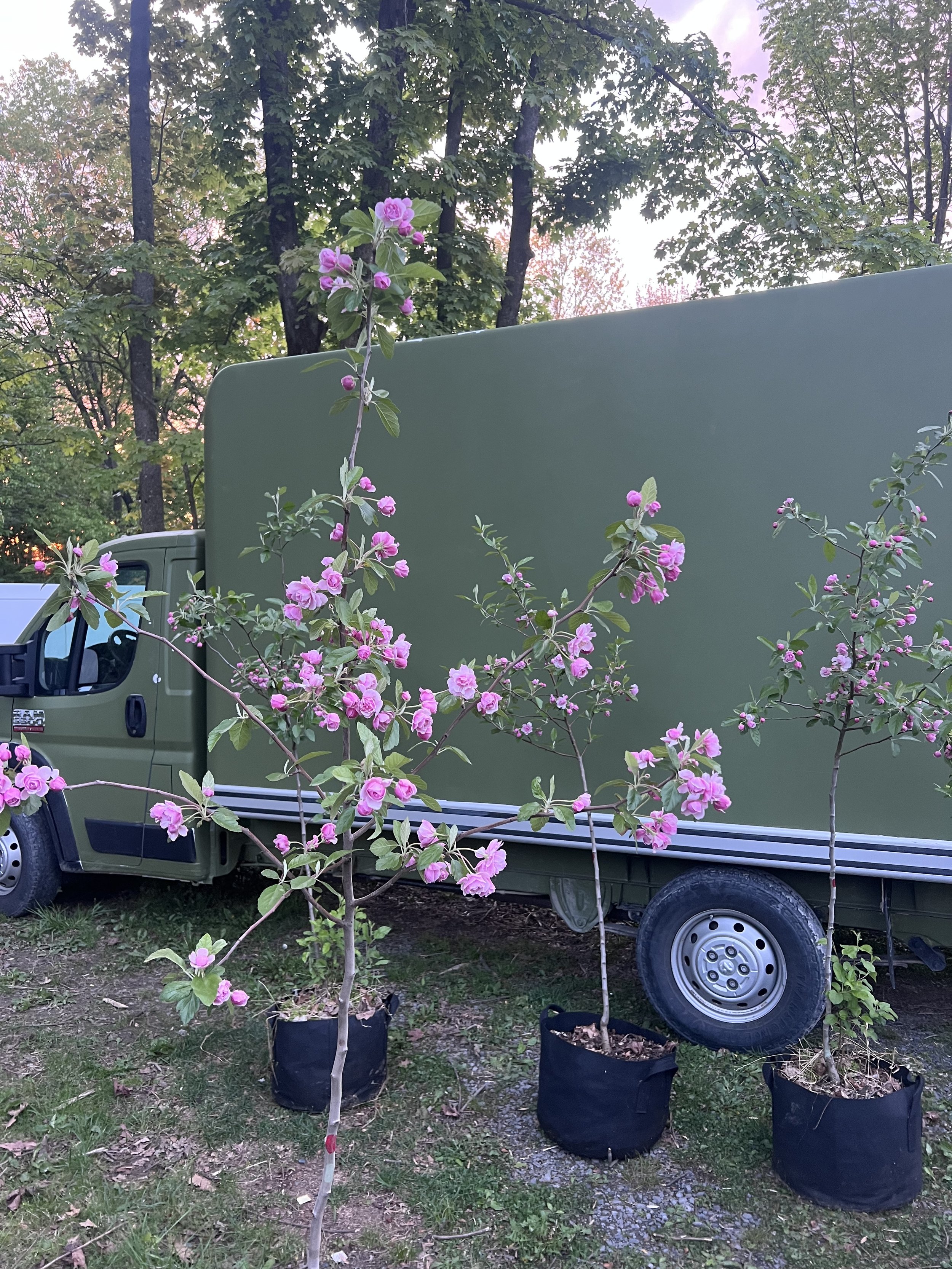
10 gallon ‘Prairie Rose’ crab apples we grew and plan on selling this year at the Beacon Farmers Markets and Rhinebeck Farmers Market.

‘Prairie Rose’ crab apple (Malus ionesis)
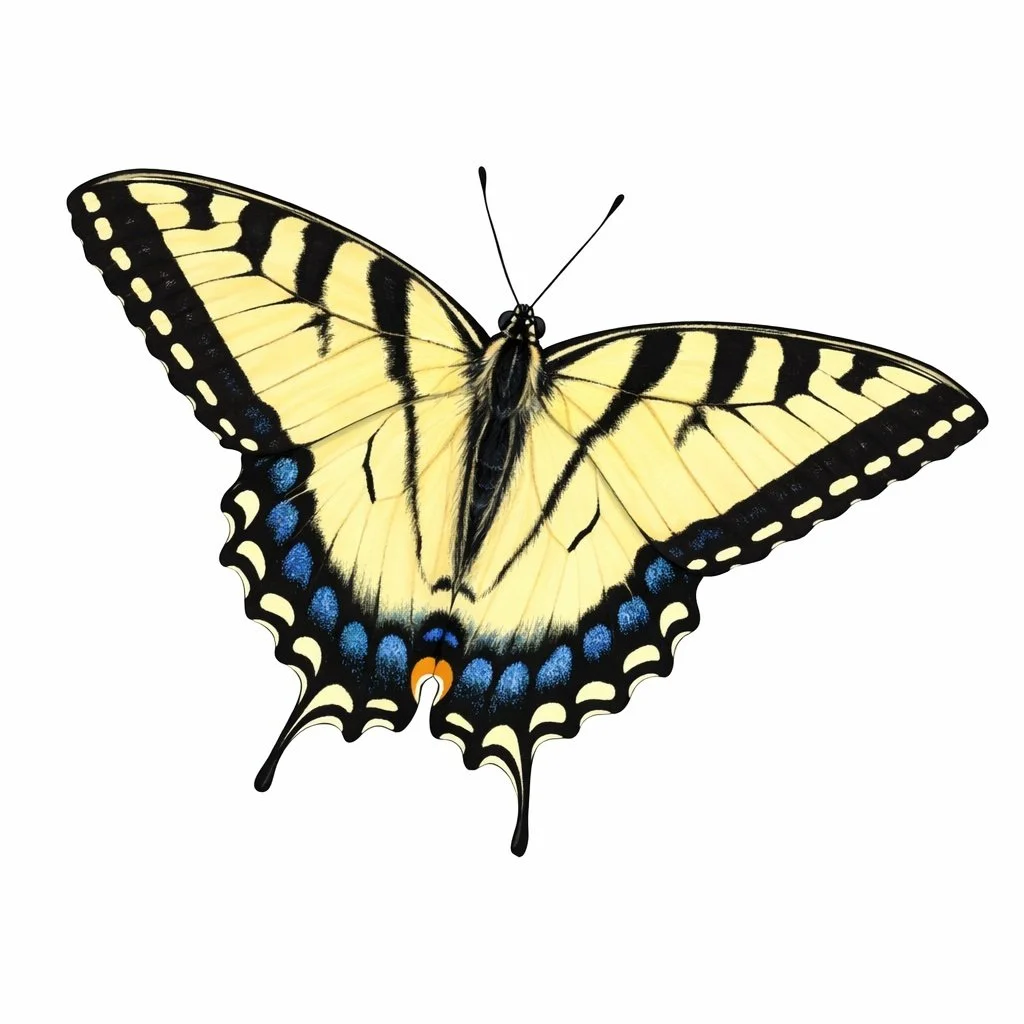
Tiger swallowtail butterfly
Host plant
Did you know Malus ioensis, the Prairie Rose Crabapple, is also a host plant for the beautiful Eastern Tiger Swallowtailbutterfly, along with many other native butterflies and moths?
While many gardeners plant flowering trees simply for their ornamental beauty, native crabapples like Malus ioensis play an important ecological role by supporting the caterpillars of numerous pollinator species. Combined with its fragrant spring flowers, wildlife value, and graceful natural form, Prairie Rose Crabapple is far more than just a flowering tree — it’s a living part of the native ecosystem.
